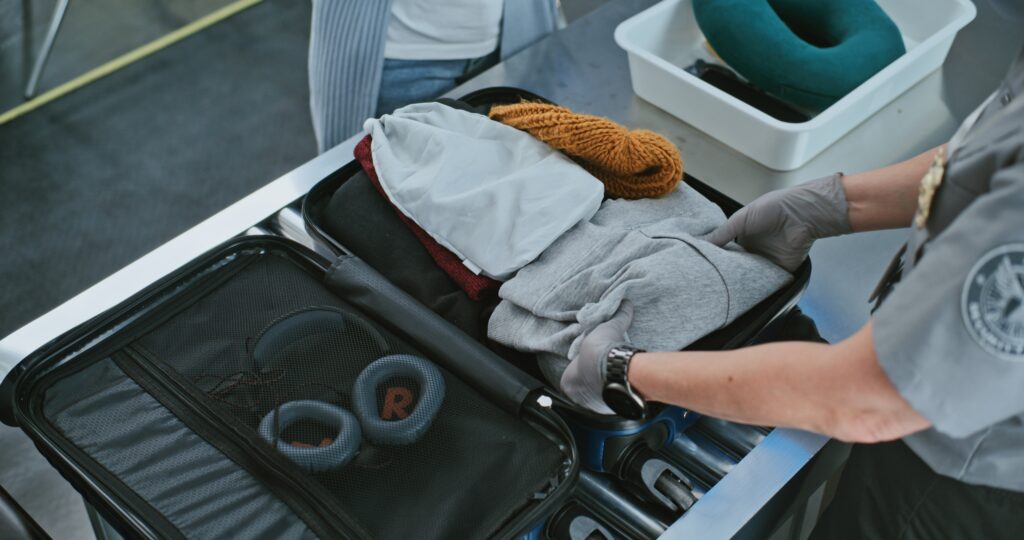
An arrest at Denver International Airport is a stressful and disorienting experience. One moment you are heading to your gate or picking up a family member, and the next you are being detained by airport security, TSA agents, Denver Police, or federal law enforcement. What you do in the minutes and hours following that arrest can have a significant impact on how your case unfolds.
At the Law Office of Richard B. Huttner, we defend people facing airport-related criminal charges in Denver and understand how quickly these situations can escalate. Airport arrests involve multiple agencies, overlapping jurisdictions, and evidence that moves fast, and having an experienced Denver criminal defense lawyer involved from the start can make a real difference in how your case is resolved.
If you or someone you know has been arrested at DIA, call us at (303) 981-6366 right away.
What Happens After An Arrest At Denver International Airport?
DIA is one of the busiest airports in the world, and it operates under a layered law enforcement structure. Depending on the nature of the alleged offense and where it occurred, you may be dealing with the Denver Police Department, the Denver Airport Security Division, TSA officers, U.S. Customs and Border Protection, or federal agents from agencies like the FBI or DEA.
After an arrest at DIA, you will typically be detained on-site, processed, and either held for transport to a Denver detention facility or cited and released depending on the severity of the alleged offense.
The jurisdiction over your case, whether it is handled as a city, state, or federal matter, depends on the specific charges and circumstances. This multi-agency environment is one of the first reasons airport arrests can be more complicated than arrests that occur elsewhere in Denver.
Common Charges That Can Arise At DIA
Airport arrests can stem from a wide range of situations. Some of the most common charges that arise at DIA include:
- Disorderly conduct or public intoxication
- Trespass or failure to comply with airport rules and airport regulations
- Possession of a controlled substance
- Firearm violations at TSA checkpoints
- Theft, shoplifting, or fraud
- Assault or threats made toward airline staff, TSA agents, or other passengers
- Drug trafficking or smuggling
- Identity document fraud
Some of these are state misdemeanor charges, others are felony charges, and some, particularly those involving firearms or federal property, can trigger federal prosecution entirely.
Can I Get Arrested For Carrying Marijuana on a Plane?
Yes. While Colorado law permits the possession of marijuana for adults 21 and older, federal law still classifies marijuana as a controlled substance, and airports fall under federal jurisdiction. TSA agents are federal employees who are required to refer marijuana discoveries to law enforcement regardless of state law. Passengers found with marijuana at a checkpoint or on a plane can face drug charges at the state or federal level.
It is also worth noting that traveling on an airplane with marijuana remains legally risky even when flying between two states where marijuana is legal. The aircraft itself is subject to federal law, and what begins as a state-level marijuana issue at DIA can escalate quickly depending on the amount involved and who is handling the investigation.
If you are facing marijuana-related charges from a DIA incident, a marijuana defense attorney with the Law Office of Richard B. Huttner can help you understand your options. Call us today at (303) 981-6366 to get started.
What To Do Immediately After A DIA Arrest
The steps you take right after an arrest at DIA are critical. Here is what to do:
- Stay calm and do not resist. Resisting arrest, even if you believe the detention is unjustified, can result in additional charges and will not help your situation.
- Invoke your right to remain silent. You are not required to answer questions beyond providing basic identifying information. Politely state that you would like to speak with an attorney before answering any questions.
- Do not consent to searches. If law enforcement asks to search your belongings beyond a standard security screening, you have the right to decline.
- Ask for an attorney immediately and clearly. The moment you ask for a lawyer, questioning must stop. Do not wait to make this request.
- Contact a criminal defense attorney the Law Office of Richard B. Huttner as soon as you are permitted to make a phone call. The earlier an attorney is involved, the more options you have.
- Note the names and badge numbers of officers involved if possible, and try to remember the sequence of events as clearly as you can.
Why You Should Not Try To Explain Everything On The Spot
After an arrest, the instinct to explain yourself is natural and understandable. You want to clear up the misunderstanding, provide context, or convince the officer that this is all a mistake.
Resist that instinct.
Anything you say to law enforcement after an arrest can and will be used against you. Statements made in the immediate aftermath of an arrest are often incomplete, emotionally charged, and taken out of context. What feels like a helpful explanation to you may look like an admission of guilt in a police report or court transcript.
Law enforcement officers at DIA are experienced and trained to gather information during these interactions. The best thing you can do for your case is say as little as possible, invoke your right to counsel, and let your attorney speak for you once you have had the opportunity to consult with them privately.
Firearms, TSA Checkpoints, And Airport Arrests
Firearm-related arrests are among the most serious and most common violations that occur at DIA. TSA screens hundreds of thousands of passengers and encounters firearms regularly, many of them brought by travelers who simply forgot the weapon was in their carry-on bag.
Regardless of intent, carrying a firearm through a TSA checkpoint is a federal violation. TSA has civil enforcement authority and can impose significant fines, but the matter does not stop there. TSA refers firearm discoveries to local law enforcement, and depending on the circumstances, a state criminal charge or federal prosecution may follow.
Under Colorado law, bringing a firearm into a secure area of an airport is a criminal offense. The consequences vary depending on whether the firearm was loaded, whether the person has a concealed carry permit, and whether there is any indication of intent beyond simple negligence. Federal charges carry their own separate and often more severe penalty structure. If you have been arrested for a firearm violation at DIA, this is not a situation to navigate without legal counsel.
How Airport Cases Can Be Different From Other Criminal Cases
Security Footage And Witnesses
DIA is one of the most surveilled environments in Colorado. Security cameras cover nearly every public area of the terminal, checkpoint, concourse, and parking structure. This means that whatever happened leading up to your arrest was almost certainly captured on video, and that footage will be preserved and reviewed by law enforcement and prosecutors.
This cuts both ways. While footage can be used against a defendant, it can also exonerate one. An experienced defense attorney will move quickly to obtain and review available footage before it is overwritten or becomes harder to access, and will use it to build the most accurate picture of what actually occurred.
Airport Rules Versus State Criminal Law
DIA operates under its own set of rules and regulations that govern conduct within the facility, and violations of those rules can trigger both administrative consequences and criminal charges. Understanding how airport-specific rules interact with Colorado state criminal law and federal statutes requires an attorney who is familiar with all three frameworks. What begins as an apparent violation of airport policy may have criminal implications that are not immediately obvious, and vice versa.
What Penalties Or Consequences May Follow An Airport Arrest
The penalties that can follow an airport arrest vary widely depending on the specific charges involved, but they can be significant at every level:
- Misdemeanor charges can result in fines, probation, and up to 364 days in jail under Colorado law
- Felony charges carry the potential for state prison sentences, substantial fines, and a permanent felony record
- Federal charges, which apply to offenses involving federal property, federal employees, or federal law, often carry mandatory minimum sentences and are prosecuted in federal district court rather than state court
- TSA civil penalties for firearm violations can reach several thousand dollars per incident
- Beyond criminal penalties, an airport arrest can affect your ability to travel, obtain certain employment, maintain professional licenses, and in some cases your immigration status if you are not a U.S. citizen
The collateral consequences of an airport arrest extend well beyond the courthouse, which is why taking these charges seriously from the start is so important.
When To Contact A Denver Criminal Defense Lawyer
The answer is as soon as possible, ideally before you make any statements to law enforcement beyond invoking your right to remain silent. Airport cases move quickly, involve multiple agencies, and generate a significant paper and video trail from the moment of detention. An attorney who gets involved early can shape how the investigation develops, identify defenses before evidence becomes harder to contest, and ensure your rights are protected at every stage.
Whether you are facing a first-time misdemeanor or a serious felony charge arising from an incident at DIA, the Law Office of Richard B. Huttner brings the experience and individualized attention your case deserves. With almost 30 years of legal experience, Attorney Richard B. Huttner knows what it takes to secure compensation for his clients. Learn more about our approach to criminal defense in Denver and why early intervention matters so much in cases like these.
Call The Law Office of Richard B. Huttner Today
Airport arrests are complex, the stakes are high, and you deserve a defense attorney who will fight for you from day one. If you or a family member has been arrested at Denver International Airport, do not wait to get legal help. Contact the Law Office of Richard B. Huttner or call (303) 981-6366 today to schedule a consultation.